


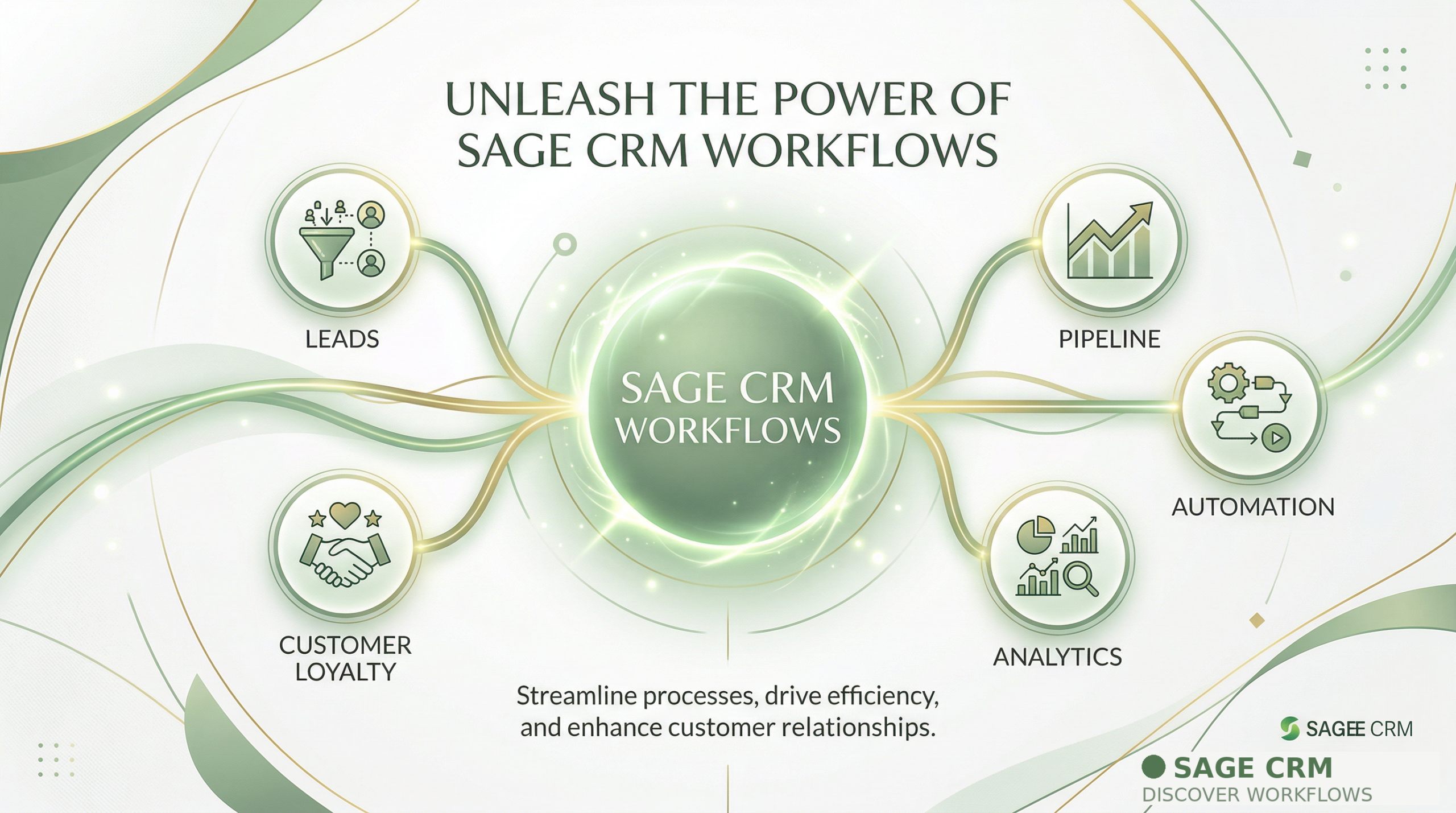
In today’s fast-paced business environment, efficiency and customer satisfaction are non-negotiable. Companies that fail to streamline their processes often struggle with miscommunication, missed opportunities, and dissatisfied clients. This is where understanding the Sage CRM workflow becomes essential. Sage CRM is a highly powerful customer relationship management solution that enables businesses to automate, organize, and optimize their operations. But why is it so crucial for businesses to grasp the Sage CRM workflow, and what aspects make it indispensable? Let’s dive deeper.
What Is the Sage CRM Workflow?
The Sage CRM workflow refers to the structured processes within the CRM system that guide how tasks, approvals, and customer interactions are managed. It is essentially the backbone of the CRM, ensuring that every activity from lead generation to customer support is handled consistently and efficiently.
Workflows in Sage CRM are customizable, allowing businesses to tailor them to their unique needs. Whether it’s automating sales approvals, routing customer service tickets, or managing marketing campaigns, the workflow ensures that the right actions are taken at the right time.
Why Understanding the Sage CRM Workflow Is Crucial?
Workflows eliminate manual bottlenecks by automating repetitive tasks. For example, when a new lead enters the system, the workflow can automatically assign it to the appropriate sales representative, send a welcome email, and schedule a follow-up. This reduces delays and ensures no opportunity is overlooked.
One of the biggest challenges businesses face is inconsistent handling of customer interactions. The Sage CRM workflow standardizes processes across sales, marketing, and customer service. This means every customer receives the same level of attention and professionalism, regardless of which department they interact with.
Customers expect quick responses and seamless service. By automating workflows, businesses can respond to inquiries faster, resolve issues promptly, and deliver personalized experiences. A well-understood workflow ensures that customer satisfaction remains high, leading to stronger loyalty and repeat business.
Workflows act as a bridge between departments. For instance, when a sales deal is closed, the workflow can notify the finance team to generate invoices and alert the customer service team to onboard the client. This interconnectedness reduces miscommunication and fosters collaboration.
The Sage CRM workflow provides valuable insights into how processes are functioning. Managers can track performance metrics, identify bottlenecks, and make informed decisions to improve efficiency. Without understanding workflows, businesses miss out on these critical analytics.
Crucial Aspects of the Sage CRM Workflow
To fully appreciate why businesses must understand the Sage CRM workflow, it’s important to explore its key aspects:
Automation is the heart of Sage CRM workflows. It reduces manual intervention, minimizes errors, and saves time. From sending automated reminders to escalating unresolved tickets, automation ensures tasks are completed without delay.
Every business is unique, and Sage CRM workflows can be customized to reflect specific processes. Whether it’s setting approval hierarchies or defining escalation rules, customization ensures the CRM aligns perfectly with business goals.
Workflows can trigger notifications to keep teams informed. For example, if a high-value lead enters the system, the workflow can alert senior sales managers immediately. This proactive approach ensures critical opportunities are never missed.
Escalation rules ensure accountability. If a task isn’t completed within a set timeframe, the workflow escalates it to higher management. This prevents delays and ensures the timely resolution of issues.
The Sage CRM workflow integrates seamlessly with Sage’s accounting and ERP solutions. This means workflows can connect customer interactions with financial and operational data, providing a holistic view of the business.
Workflows generate potential data that can be analyzed to improve processes. Businesses can identify which workflows are most effective, where delays occur, and how customer satisfaction is impacted.
Real-World Impact of Sage CRM Workflow
Consider a mid-sized manufacturing company. Before implementing Sage CRM, their sales team often lost track of leads, customer service struggled with delayed responses, and managers lacked visibility into performance. After adopting and understanding the Sage CRM workflow:
The result? – Increased sales, improved customer satisfaction, and streamlined operations.
Benefits of Mastering Sage CRM Workflow
Conclusion
Understanding the Sage CRM workflow is not just a technical necessity it’s a strategic advantage. Workflows empower businesses to automate tasks, improve collaboration, enhance customer experiences, and make data-driven decisions. By mastering workflows, companies can transform their operations, reduce inefficiencies, and gain a competitive edge in their industry.
Visit crmsystems.net today and discover how Sage CRM can revolutionize your customer relationship management.

Sage CRM Training: How to Empower Your Team for Success
Is It Acumatica? Is It Business Central? Or Is It Something Else Entirely?

The Ag-Labor Crisis: Using Workflow Data to Build a Sustainable Retention Strategy

The New Competitive Moat: Why Integrated Systems Are Your Ultimate Strategic Asset

The Power of Personalization: Winning Large B2B Accounts with Tailored Supply Chains