


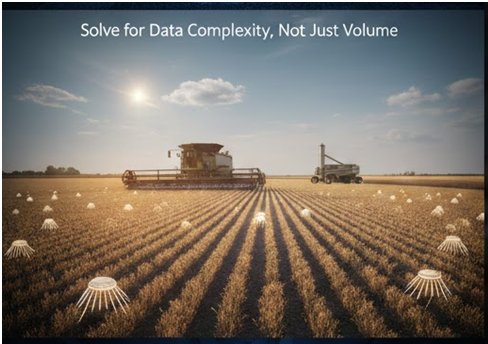
In the world of agribusiness, growth rarely happens in a straight line. It happens in surges, a sudden acquisition of 5,000 acres, a new processing facility coming online, or a pivot into a high-margin product line.
For many leaders, these milestones are bittersweet. While they represent success, they often push legacy software to a breaking point. If your current system wasn’t built for scale, “rapid growth” quickly turns into “operational paralysis.”
The goal isn’t just to grow; it’s to scale without a system swap. Here is how to structure your integrated system to handle the next decade of expansion.

When selecting an ERP or integrated system, most agribusinesses look at current needs: Can it track grain bins? Can it handle payroll? While important, these are short-term metrics.
For rapid growth, you must look at System Architecture. * Multi-Entity Support: Can the system add a new legal entity or subsidiary in minutes, or does it require a fresh implementation?
Growth doesn’t just mean more data; it means more complex data. Scaling across different regions often introduces:
A future-proof system uses Master Data Management (MDM) to ensure that a “customer” or “product” is defined the same way across every facility, eliminating the manual reconciliation that kills growth.
The biggest mistake scaling companies make is “over-customizing” their software. Heavy custom coding creates a “version lock”, where you can’t update your software because the custom code will break.
Instead, look for Configurable Workflows. You want a system where a business analyst can change a routing process or a pricing logic through a dashboard, rather than a developer writing new code. This allows you to pivot your business model in days rather than months.
As you move into high-volume transactions; be it retail agronomy or high-frequency grain trading; bottlenecks usually appear in the back office.
To stay lean while scaling, your system must prioritize Automated Exception Handling. Instead of your team reviewing every invoice, the system should only alert a human when a transaction falls outside of pre-set tolerances. This allows your headcount to stay flat even as your revenue doubles.
Strategy Tip: Don’t build for where you are today. Map out your “Nightmare Growth Scenario”, doubling your acreage and tripling your product lines overnight and ask your software provider exactly how the system handles that load.
Don’t let your software be the ceiling on your ambition. Selecting a future-proof ERP is the most significant strategic move an agribusiness leader can make to ensure long-term agility.
Ready to see what a scalable architecture looks like in action?
Contact Push Consulting Today!
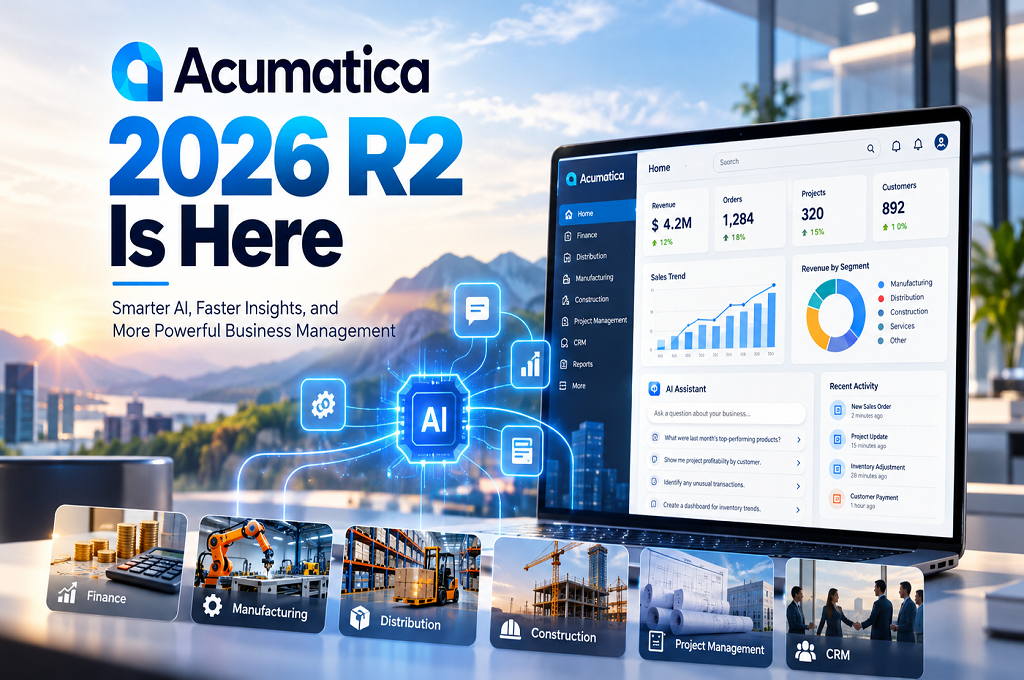
Acumatica 2026 R2 Is Here: What’s New?

Sage CRM + Sage ERP Integration: Connecting Sales With the Rest of Your Business
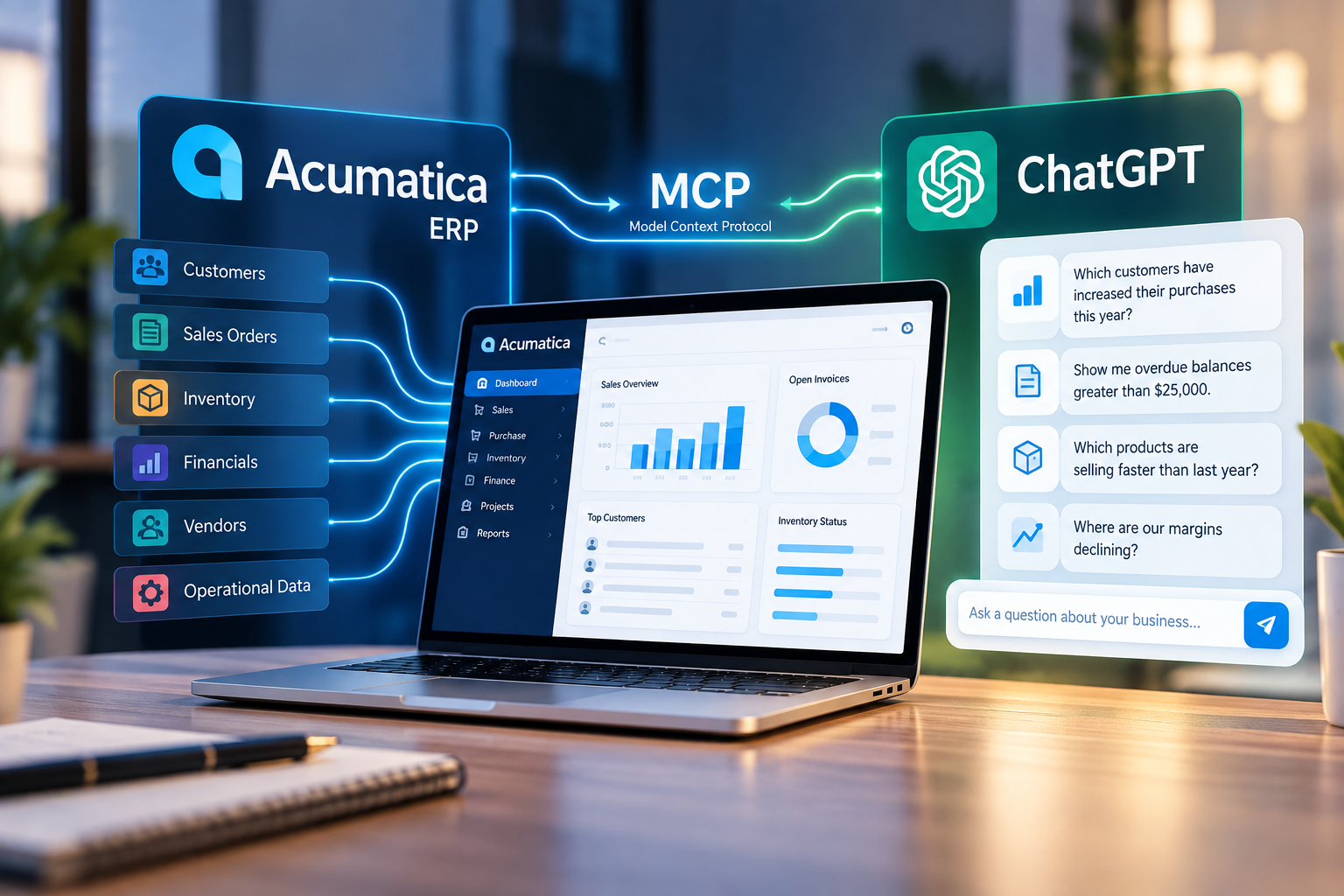
Acumatica + ChatGPT: What the New MCP Connection Means for Your Business
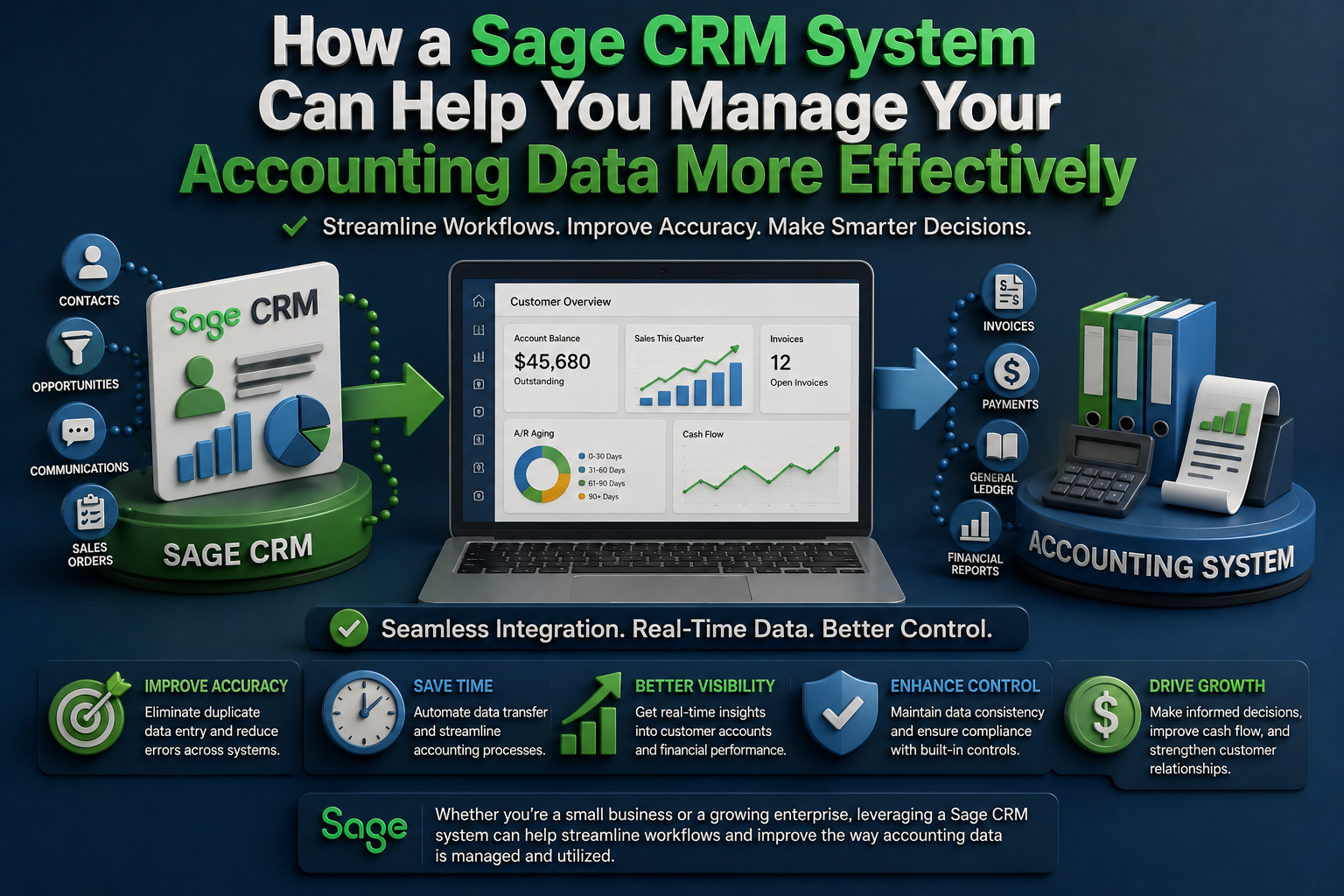
How a Sage CRM System Can Help You Manage Your Accounting Data More Effectively
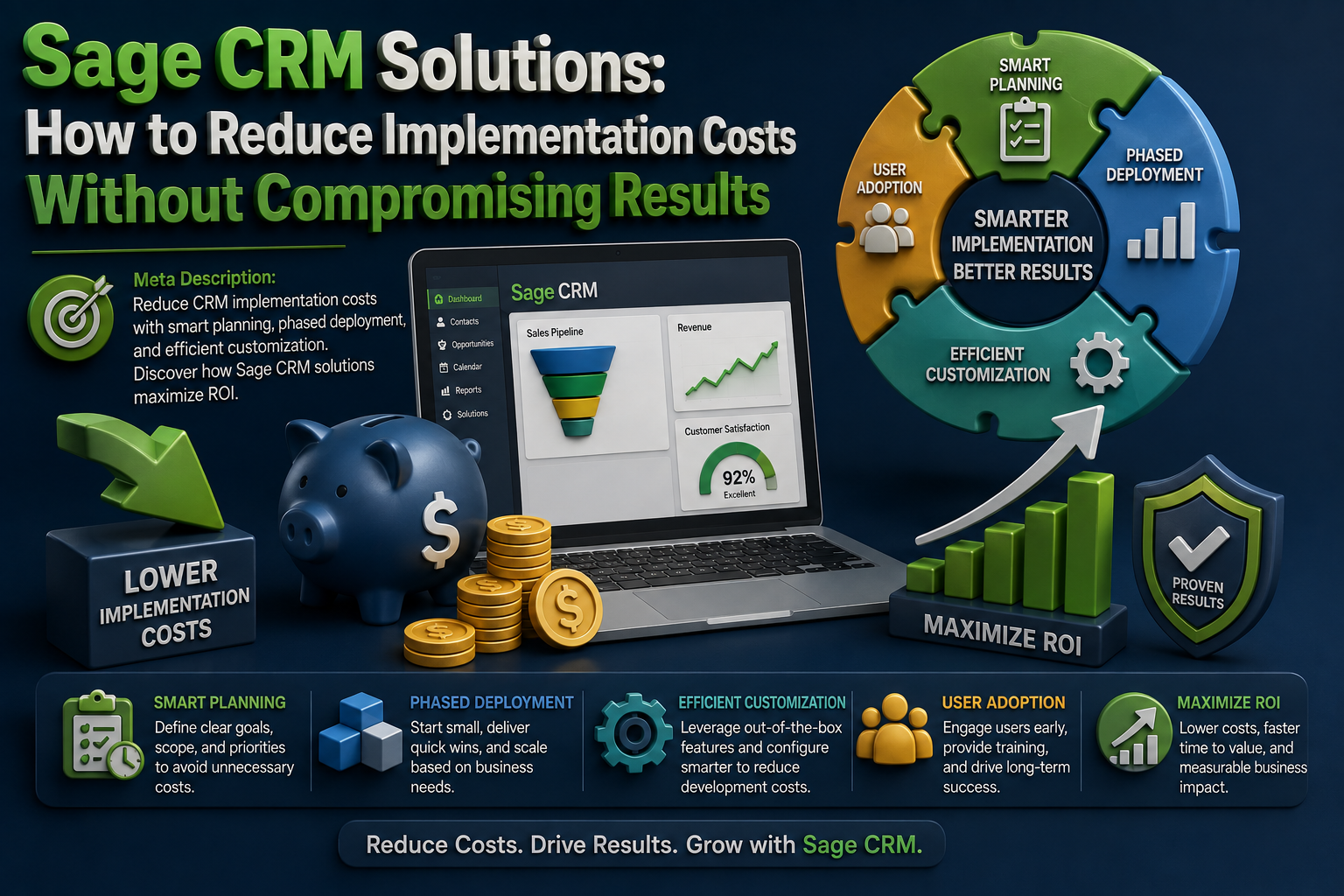
Sage CRM Solutions: How to Reduce Implementation Costs Without Compromising Results